


Crochet & (Re)Connect- Insights into WM Studio's & Kep's Workshop in Turkey
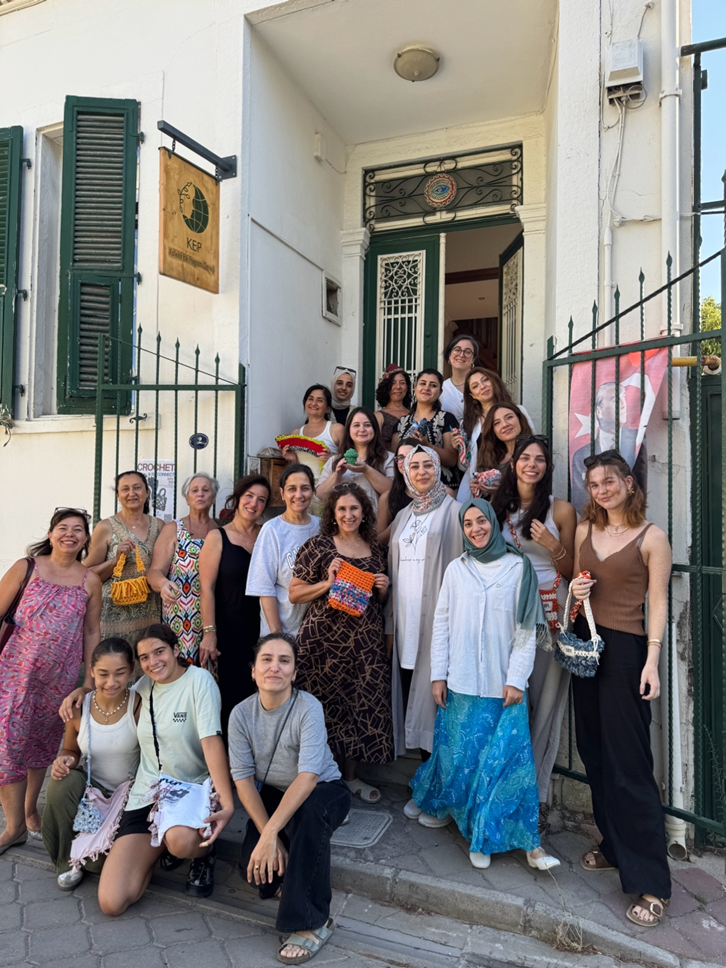
Participants of the first (Re)Connect Workshop in İzmir presenting their handmade
upcycled bags, created from pre-loved jeans and T-shirts.© WM Studio 2025
The Izmir workshop was initiated in collaboration with Kep Atelier and Kep NGO, a women-led non-governmental organisation founded in 2020 by Pervin Aydar Emeklioğlu and Buse Dalgiç. Based in Izmir, Turkey, Kep empowers women by providing free vocational training and entrepreneurship programmes in textiles, fashion and handicrafts. Their work focuses on inclusion and long-term economic participation. The workshop was co-developed with Charlotte Weber and Ramona Möllers founders of WM Studio. WM Studio focuses on circular design working under the motto “We Make Waste Matter”. WM Studio specialises in upcycling pre-loved textiles into new products, combining design, education and fair production practices through international collaborations.
Through a visit of WM Studio at Kep NGO they decided to create a space where women could come together to promote a circular mindset in preloved clothes, while also teaching practical skills such as crocheting and construction techniques. The workshop was the start of a collaboration based on shared values and vision to empower women and make fashion education more accessible.
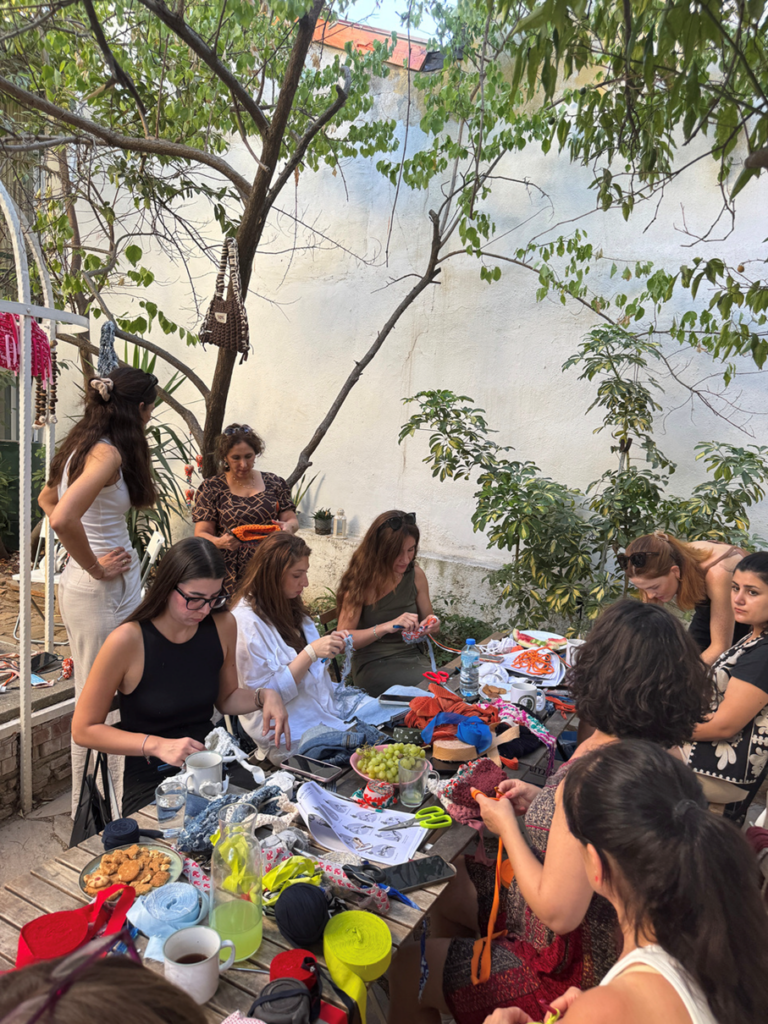
Around 20 women took part in the workshop to upcycle old jeans and T-shirts into bags. The participants included both women with a professional background in textiles and those with no prior knowledge, creating a diverse and inclusive learning environment. The session started with an introduction to the global issue of textile waste, informed by first hand experiences Weber and Möllers gained on site in Kenya, where a large share of second-hand textiles from the Global North arrives. This was complemented by an insight into the work of KEP Atelier and NGO and the role sustainability plays in keeping textiles in use for as long as possible.
Beyond the acquisition of new skills, the workshop became a place for meeting and exchange. Working together, sharing techniques, and discussing materials promoted self-confidence, mutual learning and community building. The overwhelmingly positive feedback underscored the great interest in practical upcycling formats that combine creativity, community, and economic potential.
Participants crocheting and working with pre-loved textiles during the (Re)Connect Workshop in İzmir. © WM Studio 2025
Why Upcycling Matters
Upcycling workshops offer more than just creative material reuse. They challenge common consumption habits by slowing down production processes, re-evaluating existing resources and placing human skills at the heart of value creation once more. [1;2] In this way, they foster learning environments that embody the core principles of FAIR FASHION: sustainability, inclusivity, and empowerment.
Through hands-on work, participants learn to recognise the value of textiles at the end of their product life which is often only perceived as waste. Working together in this group setting especially allowed for intellectual exchange, confidence building and a sense of shared responsibility, turning manufacturing into a collective learning experience rather than an individual task.
At the same time, these workshops serve as valuable networking spaces, helping to support future sustainable business opportunities and encouraging participants to consider entrepreneurial pathways. Insights from our FAIR FASHION case studies show that community-based formats like this often foster stronger entrepreneurial experiences, particularly among female entrepreneurs.
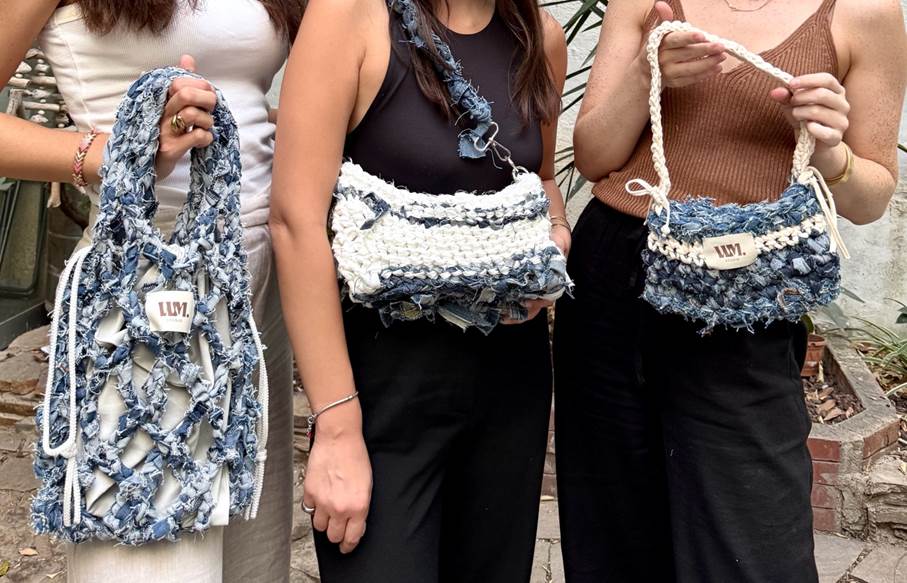
Upcycled bags created during the (Re)Connect Workshop in İzmir, made from pre-loved denim and T-shirts. © WM Studio 2025
Crucially, upcycling workshops build essential skills for a circular economy, such as reusing and upcycling garments, which are often lacking but necessary to challenge the idea of clothing as disposable. By increasing understanding of materials and product life cycles, they act as a tangible gateway to circular thinking and support the transition towards a circular textile economy. [3]
Looking Ahead
Looking ahead, the workshop in İzmir serves as an important source of inspiration for FAIR FASHION, demonstrating how local, practice-based initiatives can advance circular thinking, community building and sustainable practices. It highlights the potential of such formats to make upcycling more present in consumers everyday life. These insights encourage the development of further workshops and boot camps that not only promote circular practices but also inspire participants to explore sustainable business ideas and pathways into entrepreneurship.
Visit Kep Atelier here: https://www.keptextileatelier.org.
Visit WM Studio here: https://www.wmstudio.design.
Written by Charlotte Weber
Edited by Alexandro D. Dreyer Duarte
Hochschule Niederrhein
Sources:
[1] Bridgens, B., Powell, M., Farmer, G., Walsh, C., Reed, E., Royapoor, M., Gosling, P., Hall, J., & Heidrich, O. (2018). Creative upcycling: Reconnecting people, materials and place through making. Journal of Cleaner Production, 189, 145–154. https://doi.org/10.1016/j.jclepro.2018.03.317
[2] Kharadi, M. (2023). Upcycling in fashion and textile. In Fashion Pedia 9 (Book chapter). ISBN 978-93-91903-68-8. Parul University, Parul Institute of Design.
https://www.researchgate.net/profile/Meeta-Kharadi-2/publication/371366137_UPCYCLING_IN_FASHION_AND_TEXTILE
[3] Wright, M., & Greenwood, L. (2021). Fashion’s waste crisis and how to solve it. Eileen Fisher Foundation in collaboration with Pentatonic.